Saturday, November 5, 2011

Week Eleven - Art Gallery Visit #2

Step 1: The Exhibition
Questions about the exhibit:

1. what is the title of the exhibit?
Answer: The title of the exhibit was “The Sea around us".
2. What is the theme of the exhibition?
Answer: Water, the importance of water. Water covers 70% of the planet.

Step 2: The Gallery
Questions about the physical space:

1. what type of lighting is used?
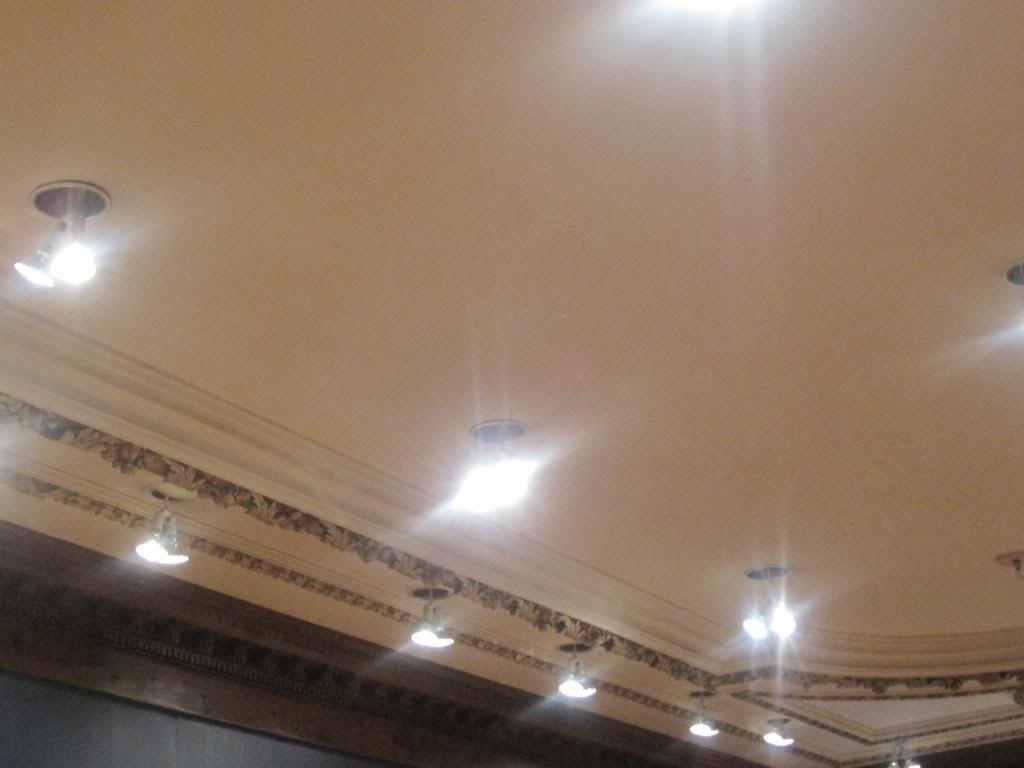
Answer: Florescent lighting that aligned the border of the ceiling, that projecting off the paintings.
2. What colors are used on the walls?
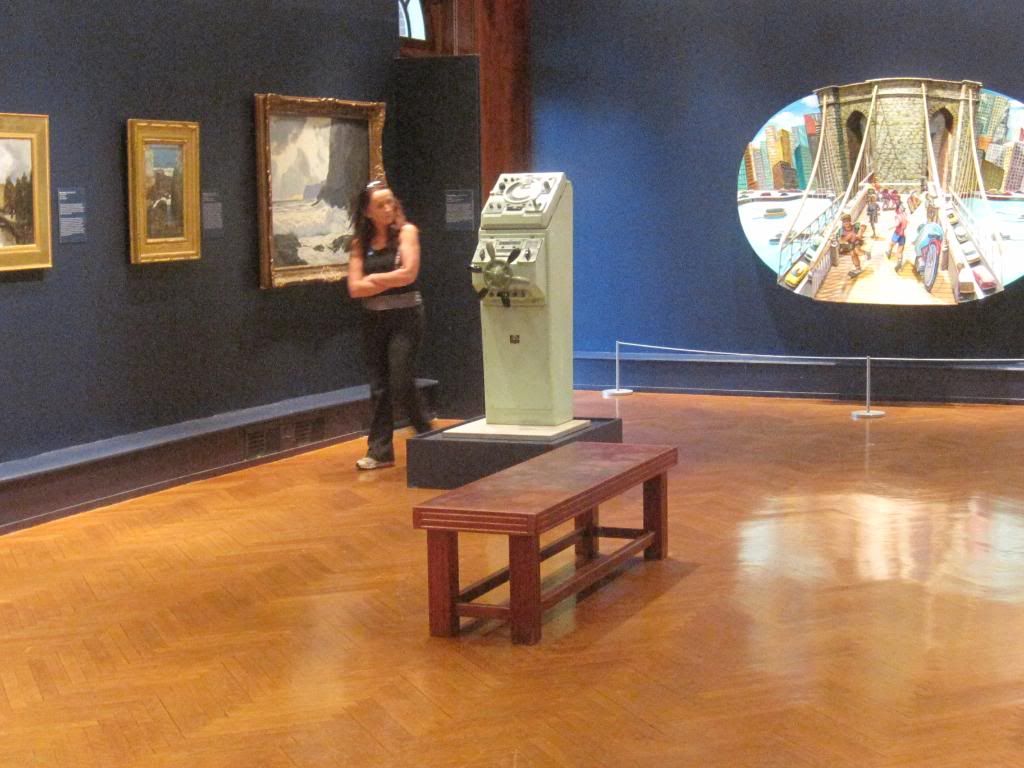
Answer: The wall was a dark blue color, complements the theme “The Sea around Us".
3. What materials are used in the interior architecture of the space?
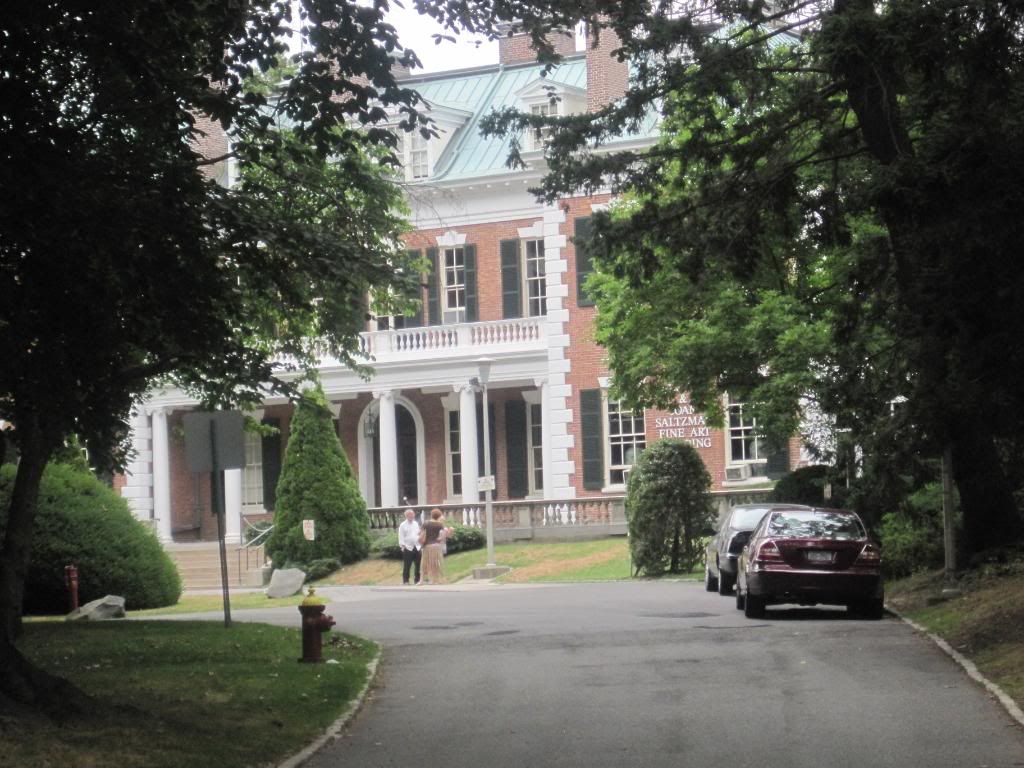
Answer: The museum was a Georgian style house, decorative border was made out of wood, gold paint was used to accent the ceiling (gilding), and wood for the floors.
4. How is the movement of the viewer through the gallery space?
Answer: The viewer can move very easily throughout the gallery space because the gallery space is clear of any distractions and clutter.

http://i1191.photobucket.com/albums/z477/jnoble4/nassaucountyartmuseum.jpg
http://i1191.photobucket.com/albums/z477/jnoble4/thegallery2.jpg
http://i1191.photobucket.com/albums/z477/jnoble4/lighting.jpg
Step 3: The Artwork

Questions about the artwork:
1. how are the artworks organized?
Answer:
Side by side, eye level, by size. The largest piece was in the front of the room and the largest piece on the side of the gallery was usually on the end of that particular side.
2. How are the artworks similar?
Answer:
The artworks all have water and show how water impacts are daily activities.
3. How are the artworks different?
Answer:
The use of water is depicted in various ways.
4. How are the artworks framed?
Answer:
The artworks have a gold border to complement the paintings.
5. How are the artworks identified and labeled?
Answer:
The painter's name, the number of years they were alive, title of the painting, the type of paint used, and collection information.
6. What is the proximity of the artwork to each other?
Answer:
They were a least two feet for each other. They were spread out throughout the room evenly.

Step 4: Art Criticism Exercise
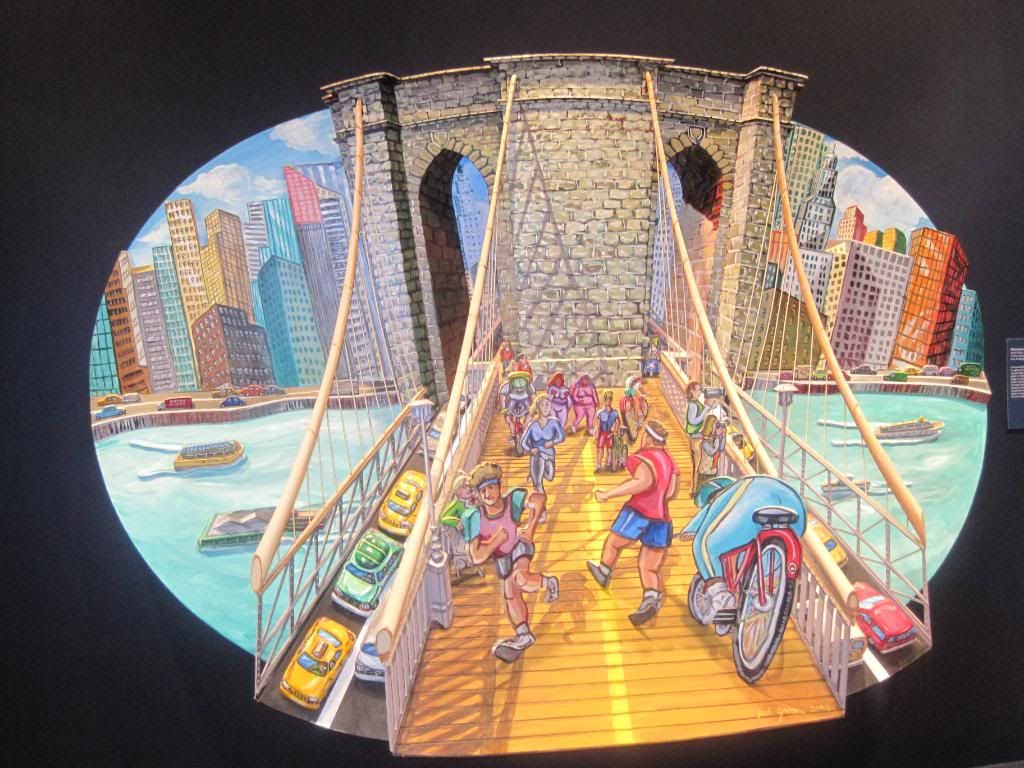
1.Red Grooms' Joseph's Bridge, 2004
Acrylic and wood
Gary& Marilyn Hollinger
Analysis: One of my favorite pieces throughout the gallery and exhibit. The painting was an installation depicting the Brooklyn Bridge and the bustle of New York City. People are of different racial ethnicity are depicted bicycling, jogging, pushing a stroller, hugging. There are taxis and vans on the bridge and Tugboats and cruisers in the water. After closely analyzing the painting, I observed the Africans Americans to be overweight in the painting. Unfortunately, I feel the painter was going by factual information. In terms of elements and principles used, I feel the artist did an excellent job balancing the painting by putting all aspects of the city live in the painting. He used yellow as the boardwalk color, creates an excellent contrast between the foreground and background. Overall, he uses bright colors, to draw the viewers into the piece. The boardwalk stands out of the painting, to put more emphasis on the boardwalk and bridge.

http://i1191.photobucket.com/albums/z477/jnoble4/exhibtsports.jpg
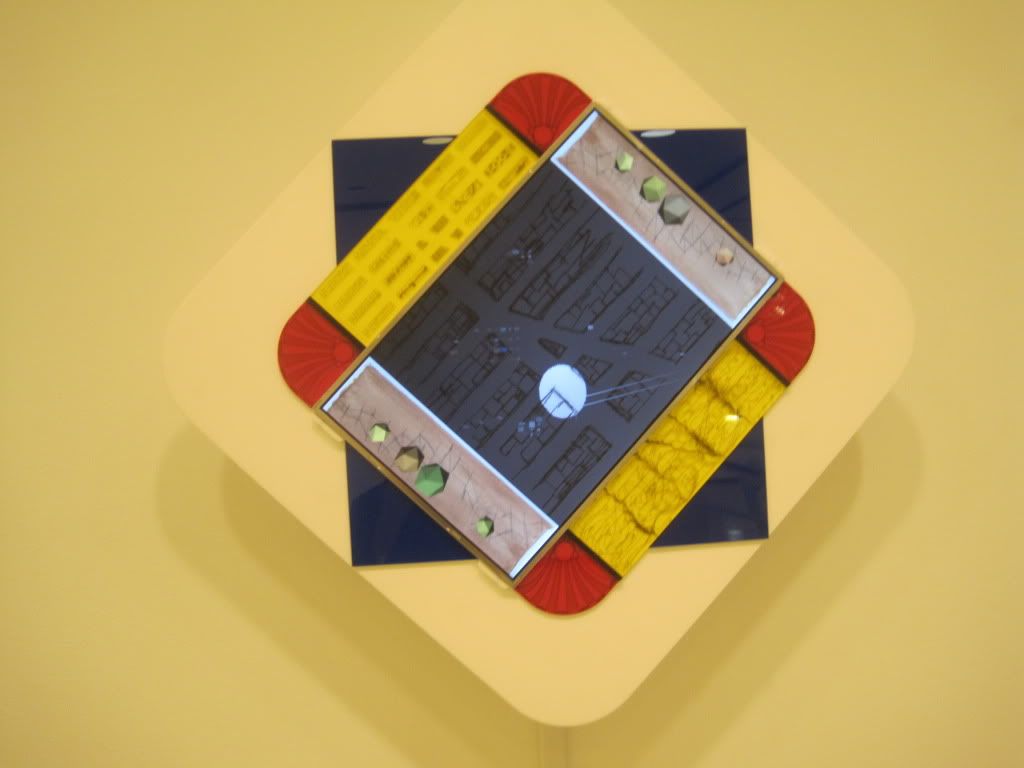
2.
Artisit: John F. Simon Jr.

Title of work: Endless Victory

Media: Software, Apple Powerbook G4 and acrylic plastic

Size: N/A

Date: 2005

This piece of art has there squares the one on the bottom is white that is in the position of a diamond and the middle one is blue that is layered like a normal square and the top one is multi colors of red yellow white that is the power book and is layered in the diamond position. There is always movement of the details that are in the top square. Line is as symbols in this piece it also has implied shapes such as the squares. The frames force the viewer to look across the pieces. The light of the software emphasizes certain things at different times. He uses primary colors, red yellow and blue to draw attention to the top square. When certain images are played he uses space to create a 3 or 4 dimensional feel. The new images of everyday shapes that pop of reminds me that there is always something new in life to appreciate there is an endless number of choices one can make even if they are the simplest. I think the artist is trying to say is that things never ending he illustrates this with the constant movement in piece.
http://i1191.photobucket.com/albums/z477/jnoble4/012-1.jpg

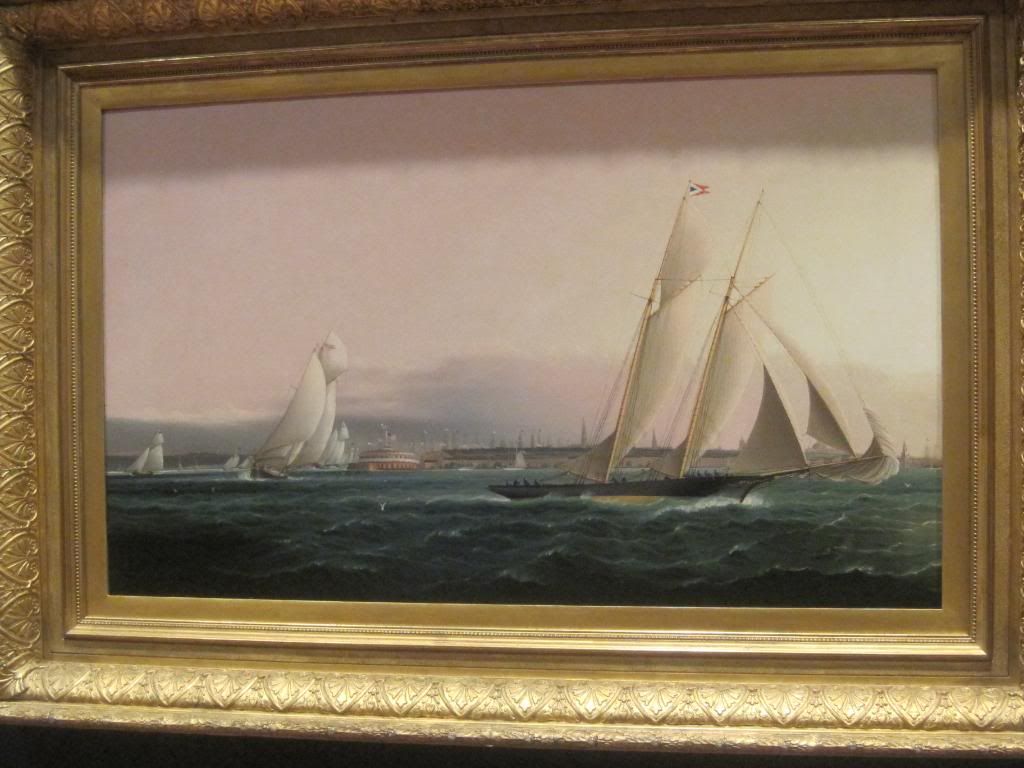
3. James E. Butterworth
The New York Yacht Club Schoorer,Resolute, Leading the fleet
Oil in canvas
Analysis: In this painting the yacht is leading the fleet against the waves. The background value of background creates an excellent contrast between the sea and background. The painter uses waves in the painting to capture the motion of the ocean; I feel the waves also provide texture for the painting. The artist paints clouds, to put an emphasis on the weather. Cloudy usually suggest bad weather. There are small ships painting in the background to emphasize the fleet and yacht. The yacht is painting bigger than the fleet, excellent proportion. He is using water to unify the piece.

Friday, November 4, 2011

Week Eleven - Blog: Video Review

1. Explain why you selected each of the FOUR videos you choose from the selection listed above.
I selected the videos: Matisse and Picasso, The Impact of Cubism, Dada and Surrealism, and Expressionism. I selected these videos because each are about either an artist or style that I find interesting. I chose the videos I did to learn more about these artists or styles that stand out to me.
2. For each video list/discuss the key concepts you learned.
Matisse and Picasso:
The key concept of this film is the relationship and connection of the artists Matisse and Picasso. The film shows examples of paintings and sculptures from each, and uses film clips to archive the journey of each artist. The points on their journey where these artists cross is the key part of this film. Françoise Gilot and Picasso’s son Claude provide insight on Picasso’s connection with Matisse.
The Impact of Cubism:
The key concept of this film is the Influenced of the works of Cézanne, African tribal art, and the art of the Iberian Peninsula on Cubism. Cubism was the most influential style of the 20th century and provided artists with nontraditional ways to represent space and form. The film examines pieces such as Juan Gris’ The Breakfast Table (1915), Marcel Duchamp’s Sad Young Man on a Train (1911), Robert Delaunay’s Champ de Mars (1911), Sonia Delaunay’s Electric Prisms (1914), Kazimir Malevich’s An Englishman in Moscow (1913-14), and Umberto Boccioni’s Farewells (1911)
Dada and Surrealism:
The key concept of this film is the Dada movement. Which was born as a reaction to World War I. The film also covers the movement of Surrealism which opened new avenues for artistic creation by striving to bypass the reasoning process and tap directly into the unconscious mind. The video examined Kurt Schwitters’ Merzbild 25 A (1920), Hanna Höch’s Cut with the Kitchen Knife (1919), George Grosz’ Untitled (1920), Joán Miró’s Dutch Interior I (1928), and Salvador Dalí’s The Burning Giraffe (1936).
  Expressionism:
The key concept of this film is expressionism which is an outgrowth of Fauvism. Expressionism emphasized color's emotional properties while demonstrating far less concern than the Fauves had with the formal and structural composition of color. The film also covers how Contemporary Neo-Expressionism has further developed this artistic approach. This program examines: Edvard Munch's Ashes (1894, Osloo Franz Marc's The Tiger (1912), Municho Ernst Ludwig Kirchner's Five Women in the Street (1913), Cologneo Max Beckmann's Actors (Triptych) (1941-42), Cambridgeo Georg Baselitz's The Great Friends (1965), Viennao Anselm Kiefer's Interior (1981
3. How do the videos relate to the readings in the text?
The videos relate to the reading in the text because they discuss many of the artists and art work from the chapter. They also discuss many of the same styles and movements that were covered in the chapter.

4. What is your opinion of the films? How do they add depth to understanding of the readings and art concepts?
In my opinion the films are well put together and entertaining. They provide much information on the subjects and give many examples of what they are talking about. The films add depth to understanding by providing a visual reference for the information covered in the book. The films also delve deeper into the information explained in the books, and provide more information. This helps to add depth to understanding and increases the viewers knowledge of the subject matter discussed in the book better then the reading alone can provide.

Week Ten- Art Making/Material Exploration Blog: Mask Making

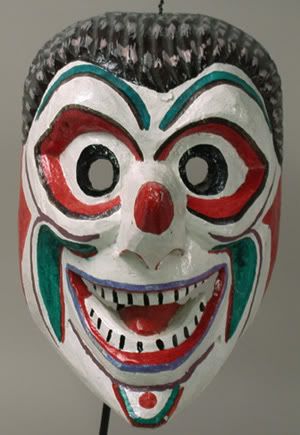
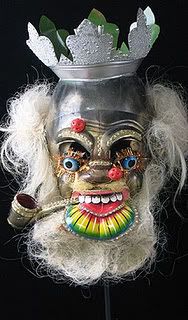
1. The 3 mask that I chose were very interesting. On the first mask i liked the patterns that are all around the face. On the second mask i like the horns and the giant eyes that are very emphasized. The last mask caught my attention because of how much is going on in the mask, and the vast amount of variety.
 2.The first mask is an Ecuadorian clown mask. It is 10 inches and made from painted wood. The mask is an oval shaped face with its mouth open. It is painted in red, white, black, and blue, with patterns surrounding the face. It has a red circle on its nose and outlined cheeks, eyes, and eyebrows. The elements and principles that can be found in this piece are form, line, shape, and balance. The mask is 3D and take up a form, there are many lines in the piece, these lines make up shapes and patterns. The whole mask is symmetrically balanced.
  3. The second mask is a Bolivian China Supay mask. It is 14 inches, and made with fiber glass, plaster, paint, papier mache, sequins, and glitter. The mask is an oval shaped face with twisting horns jutting out from each side. The horns are patterned and the eyes are large and emphasized. There are jewels that run along its chin. The elements and principles that are present are from, line, shape, balance, color, emphasis, and rhythm. From is present because it is a 3D mask that takes up space. Line is present and created shape in the mask. The entire mask is symmetrically balanced, and color is used to emphasize the eyes and the horns. Rhythm is found on the pattern on the horns.  
   The last mask is a Moreno Mask. It is 15 inches, and made with painted tin, hair, and jewelry. The mask is an oval shape with a face that has small spaced out eyes, a large nose, and a large chin. The mouth has a row of large teeth, and there is a pipe in it. On the top of the mask is a crown and it is surrounded by a large amount of hair. The elements and principle found in the mask are form, variety, balance, rhythm. Form is present because the mask is 3D and takes up space. There is much going on in the mask so variety can be found. The mask is symmetrically balanced, and rhythm can be seen in the repeating shaped found all over the mask.
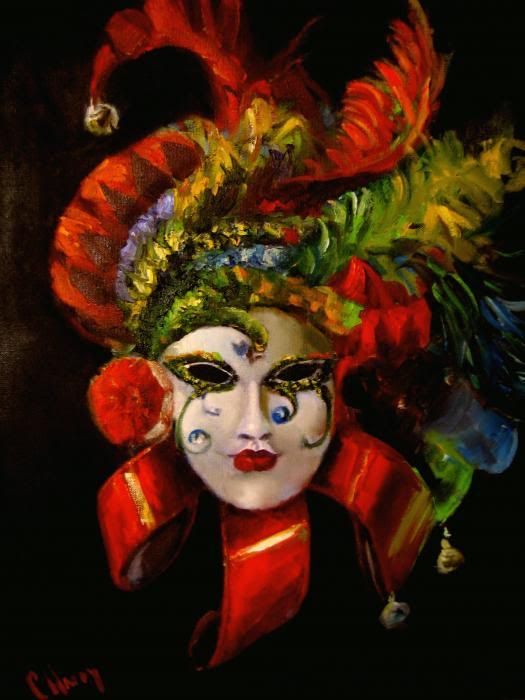
The first of these 3 images is my final mask, the other 2 are ideas and preliminary sketches. I used the elements and principles of balance, rhythm, variety, texture, line, and shape. Balance is present because the whole mask is symmetrical. Rhythm is found in the horns and the repetitive patterns. Variety is present because of the vast amount of things happening in the mask. texture is found in the hair surrounding the mask. And line and shape are found in the shapes created around the face and the lines used to make these shapes.
In my opinion i think my mask is very interesting and has a lot of things in it, this requires time to take it all in. I based it off the 3 masks i listed in the beginning, and by adding elements found in all 3 of those masks to one mask i think it created a very unique piece. I enjoyed the process of researching all of the masks and then creating my own from these inspirational pieces. Overall i think it was a fun and interesting project that i enjoyed completing.

Saturday, October 29, 2011

Week 10 Blog Video

1. Explain why you selected each of the FOUR videos you choose from the selection listed above.I chose the four videos that I chose because they sounded the most interesting to me. I chose to learn about Buddhism, Chinese art, Japanese art and African art.. These are 3 cultures that interest me greatly so I chose the videos to learn more about them.
2. For each video list/discuss the key concepts you learned.
Buddhism:
This film explains the birth of Buddhism and its spread. It uses detailed analysis of the architecture and art of this religion to show how it has grown and spread. It focuses mainly on the places where it has flourished such as Mahabodhi Temple.
Chinese Art: Treasures of the National Palace Museum:
This film spotlights 33 different pieces of Chinese art, and their influence on the Chinese culture. These pieces are rarely seen out of the museum that hold them, and they help to show how the Chinese culture has changed and transformed through the pieces.
The Great Wave (Japanese Art):
This film tells the story of an iconic image known as The Great Wave. It also tells of its visionary maker, and the times in which he lived. It also decodes the multiple meanings of The Great Wave, and explains the mechanics of wood block printing.
African Art:
The main concept of this film is the culture of the African tribes and the art that is involved in the everyday life of these tribes. The video describes the rituals and other artistic expressions that take place in these cultures. It also shows how and why these artistic expressions are important to the people.

3. How do the videos relate to the readings in the text?
The videos relate to the readings in the text because they are videos about the cultures that are discussed in the reading. The videos show the cultures from the reading and art from these cultures.
4. What is your opinion of the films? How do they add depth to understanding of the readings and art concepts?
I enjoyed the films and feel that they do much to enhance my knowledge on these cultures. They add depth to understanding by allowing me to see more about the art of these tribes. It also adds more information that the books did not include. This adds more depth to my understanding of the material.

Tuesday, October 25, 2011

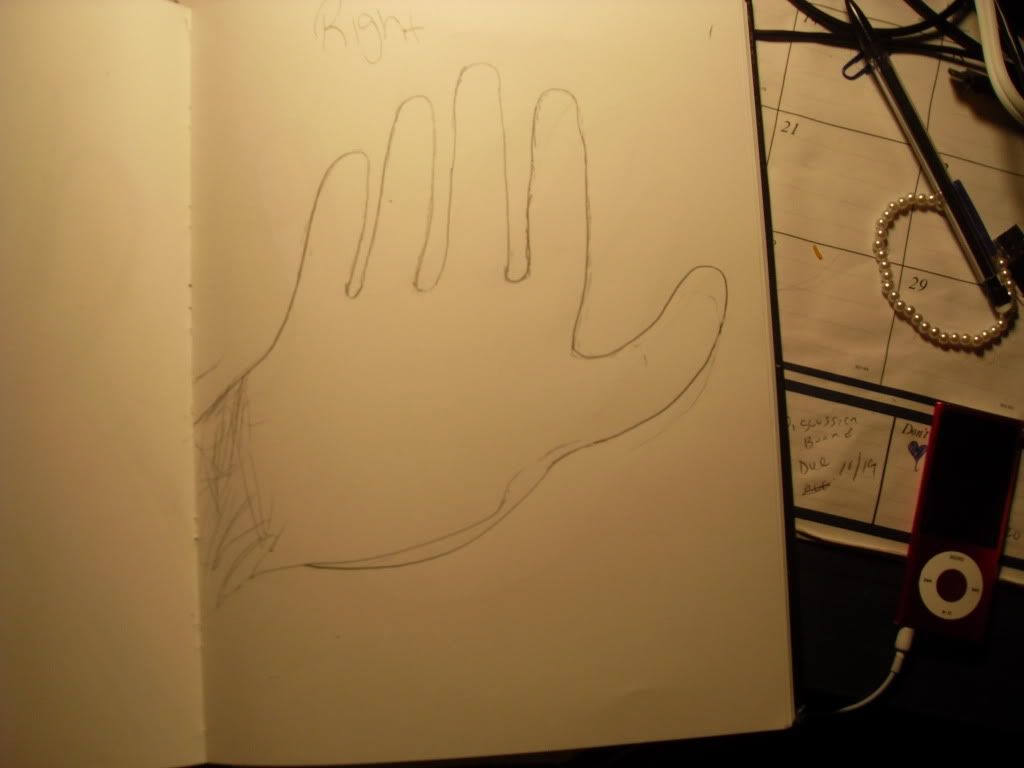
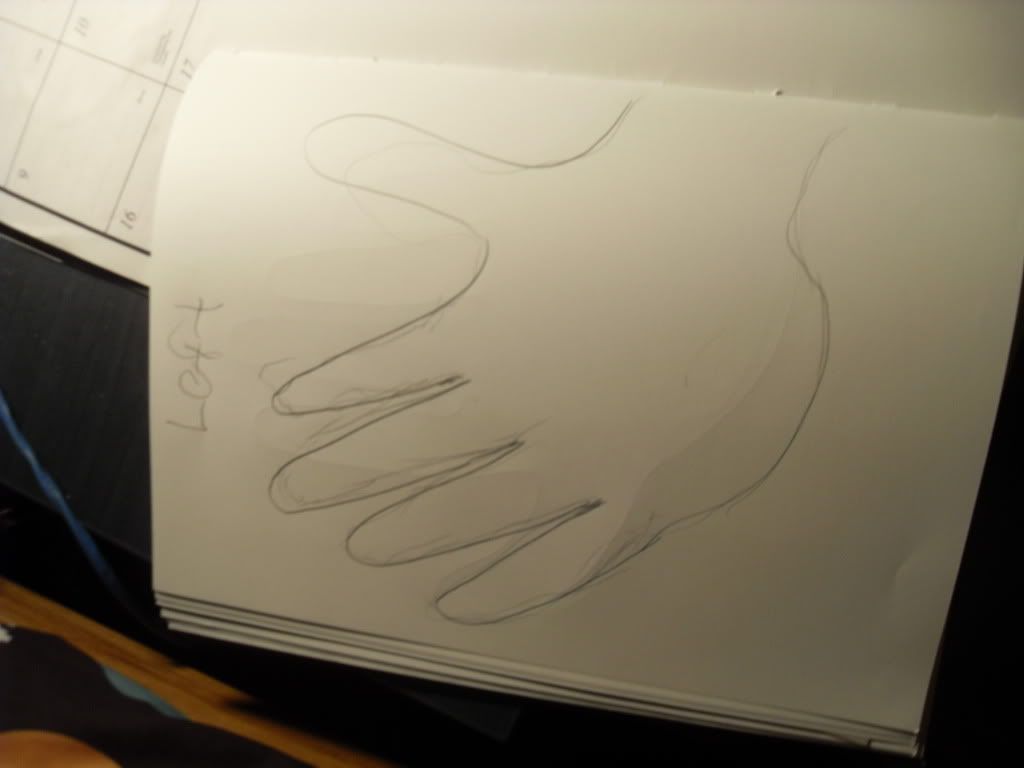
Week Nine - Art Making/Material Exploration Drawings - Exploring Line

1. What was it like using your hand as subject matter for a drawing?
 By using my hand as the subject matter of my drawing it made me have to think about how the hand looked, by putting it in 3D Form I disliked using my own hand because it is hard to keep the same pose for the whole drawing.
2. What media did you select - pencil or charcoal? Why?
 The media that i chose was pencil because i feel that pencil offers a little more control . I also didn't have any charcoal on hand and pencil was easier to find.
3. How did it feel to create a drawing with your non-dominant hand?
 To create a drawing with my non-dominate hand was awkward. The process was a lot slower
4. Compare and contrast your final drawings. Do you think they are successful studies?
 The drawing of my left hand is not as good as the drawing of my right. Because i am right handed i believe that the drawing of my right hand is more realistic looking. .
5. Would you consider using your non-dominant hand to create artwork in the future?
No i would not consider using my non-dominant hand because i am less able to control my movements with that hand. My right hand allows me to control where i want the pencil to go, whereas with my right hand it is more shaky and less controlled.

Sunday, October 23, 2011

Week Nine - Blog: Video Reviews

1. Explain why you selected each of the FOUR videos you choose from the selection listed above.
I picked the four videos that I chose because I was familiar with the artists who the videos were about. Leonardo Da Vinci, Michelangelo, Albrecht Durer, and Rembrandt were the artists in the names of the films and these artists are familiar to me. I chose these four videos to learn more about these artists who I have learned about before.
2. For each video list/discuss the key concepts you learned.
            Leonardo da Vinci: The Mind of the Renaissance:
The main concept of this film was the life and works of Leonardo Da Vinci, the most influential person to have lived during the renaissance. They describe his life from birth to death and list his numerous achievements and great works. Leonardo was the quintessential Renaissance man and this video proves that.
            The Drawings of Michelangelo:
The main concept of this video is how art students can learn from comparing Michelangelo’s finished works with his preparatory drawings that he made. The film compares his drawings with his sculptures, paintings, and architecture that came from them. The film explores and analyses works such as the Pieta, the colossal David, The Sistine Chapel ceiling, and The Last Judgment. The film also looks over the artist’s tools, techniques, and the evolution of his style.
            Albrecht Durer: Image of a Master:
The main concept of this video is the life and work of Albrecht Durer the most famous artist of the Northern Renaissance. He was believed to be the main reason for the spread of renaissance beliefs to a Germany dominated by Gothic tradition. The film focuses on some of his most important pieces, his woodcuts, paintings, and engravings. The film also focuses on the people who had influence on his life. These people include Anthony Koberger, Michael Wolgemut, and Willibald Pirckheimer.
            The Night Watch:
The main concepts of this film are the life and works of Rembrandt, but most importantly the work The Night Watch. The film deconstructs this piece and explains the many conventions that it broke during this time. Through its suggestions of movement, dramatic use of light and perspective, and its composition; it broke many of the conventions of art during this period. The film also focuses on the importance this piece holds with the Dutch, and the amount of damage that has been done to the piece over time.

3. How do the videos relate to the readings in the text?
The videos relate to the readings in the text because they are all about renaissance artists. This relates because the chapters discussed this week dealt heavily in renaissance art and the artists that contributed to this time period. Leonardo, Durer, Rembrandt, and Michelangelo were all large contributors to the art and styles of the Renaissance.

4. What is your opinion of the films? How do they add depth to understanding of the readings and art concepts?
All four of the films are well constructed and very informative. Each explains its subject very well and in great detail. These films add depth to understanding of the readings and art concepts by going into more depth on the subjects that were presented in the text. They also achieve this by adding more visuals of the artwork of the period being discussed. The films help because not only do they develop on the information shared in the books, but they also provide more visuals to help to elaborate the points that are trying to be made

Monday, October 17, 2011

Week Eight - Blog: Video Reviews

1. Explain why you selected each of the three videos you choose from the selection listed above.
I chose the Late Gothic Art video because that time in history is very interesting to me.  The second     video that I chose was the birth of the Middle Ages.  This is known as a dark period in history.  The third video is the Cairo Museum.  I'd love to visit this museum!

2. For each video list/discuss the key concepts you learned.
The first video I learned that art had gotten much better by the late middle ages.  During the second  video I learned that Japan also had their version of the middle ages around the same time.  The third video didn't really teach me much but it was very interesting.

2. How do the videos relate to the readings in the text?
The videos expand on what the textbooks cover.  A lot of this was repetitive.  I didn't learn too much more than what was covered in the book.

3. What is your opinion of the films? How do they add depth to understanding of the readings and art concepts? 
I don't think that they added much depth this time.  I feel like it was very repetitive and time consuming.